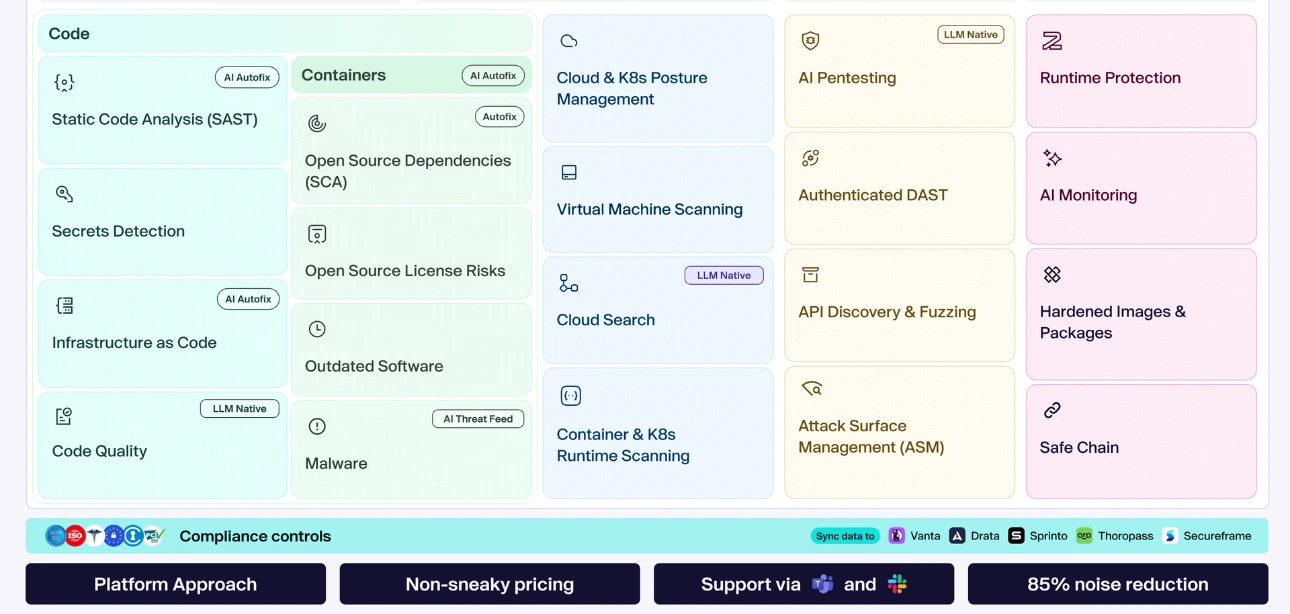
We bring you an all-in-one security platform to secure your applications, code, containers, clouds, APIs & domains!
DEFENDING +3,000 organizations, including
All-in-one application security
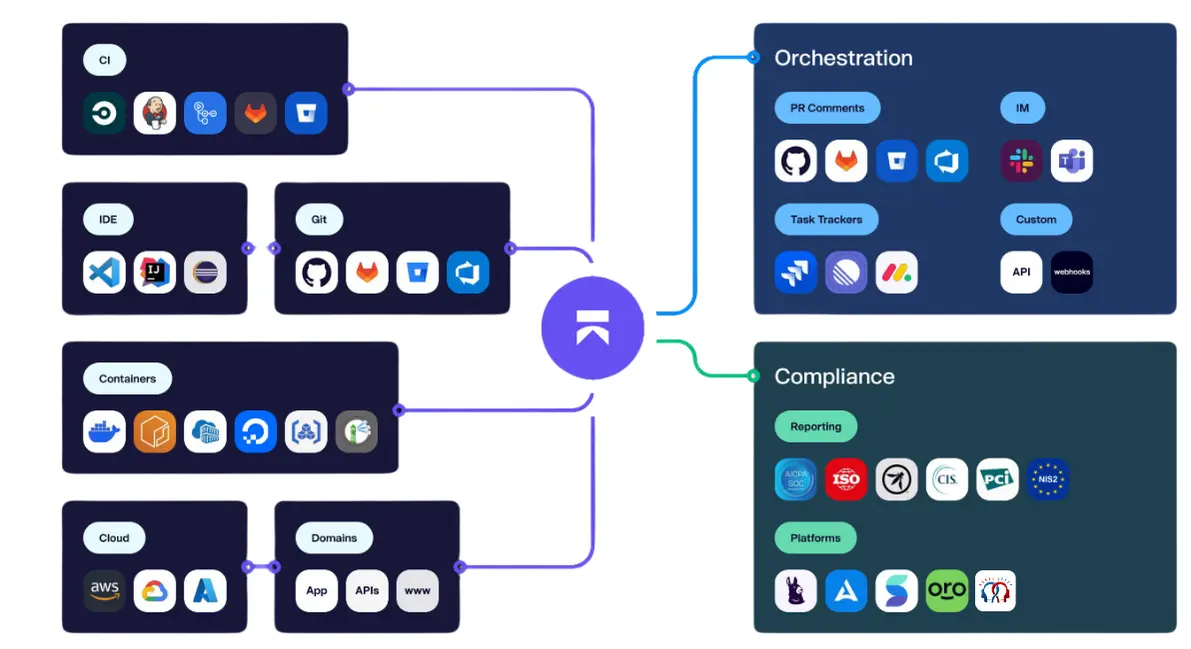
Simplify your security with a unified platform that protects every stage of your application lifecycle—offering static code analysis, container and cloud security, runtime protection with Zen Firewall, and AI-powered autofix—all seamlessly integrated to keep your application safe and compliant.
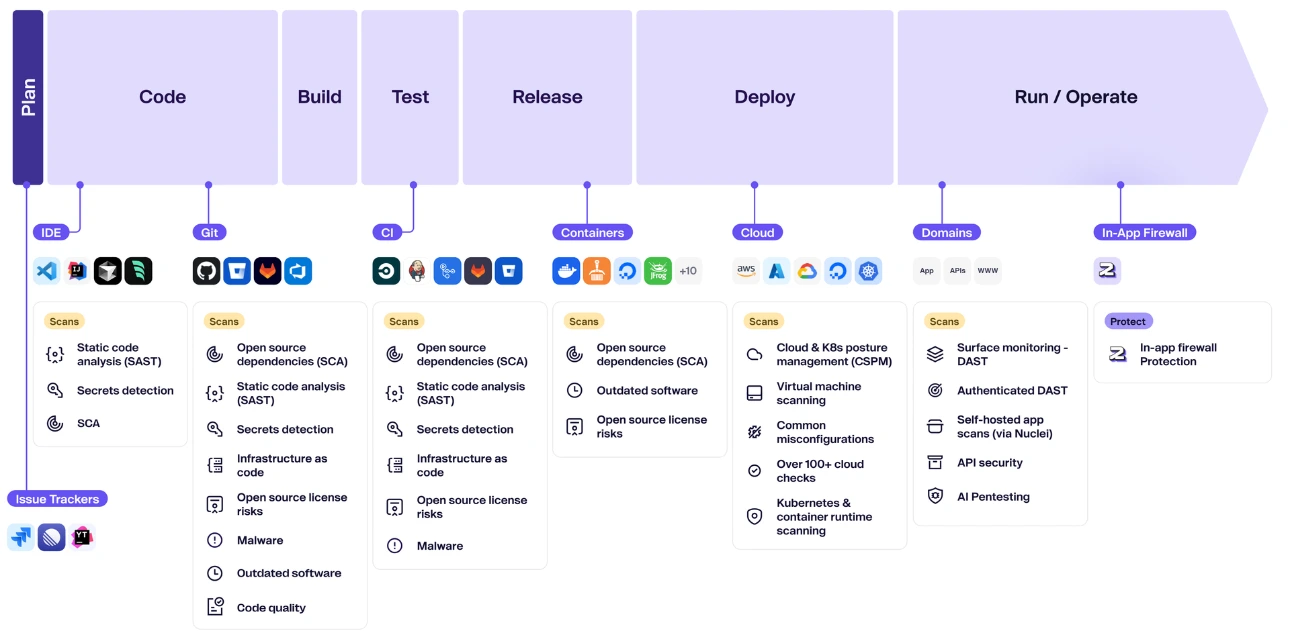
Covers all parts of your SDLC
Secure every phase of your Software Development Lifecycle (SDLC) with an integrated approach that covers planning, coding, building, testing, releasing, deploying, and runtime operations. From static code analysis (SAST) and secrets detection in IDEs to open-source dependency and cloud posture management, surface monitoring, and real-time runtime protection, this platform ensures robust security across all stages, preventing vulnerabilities and protecting against critical threats.
Pentest.ai
Validate vulnerabilities with AI-powered Pentesting
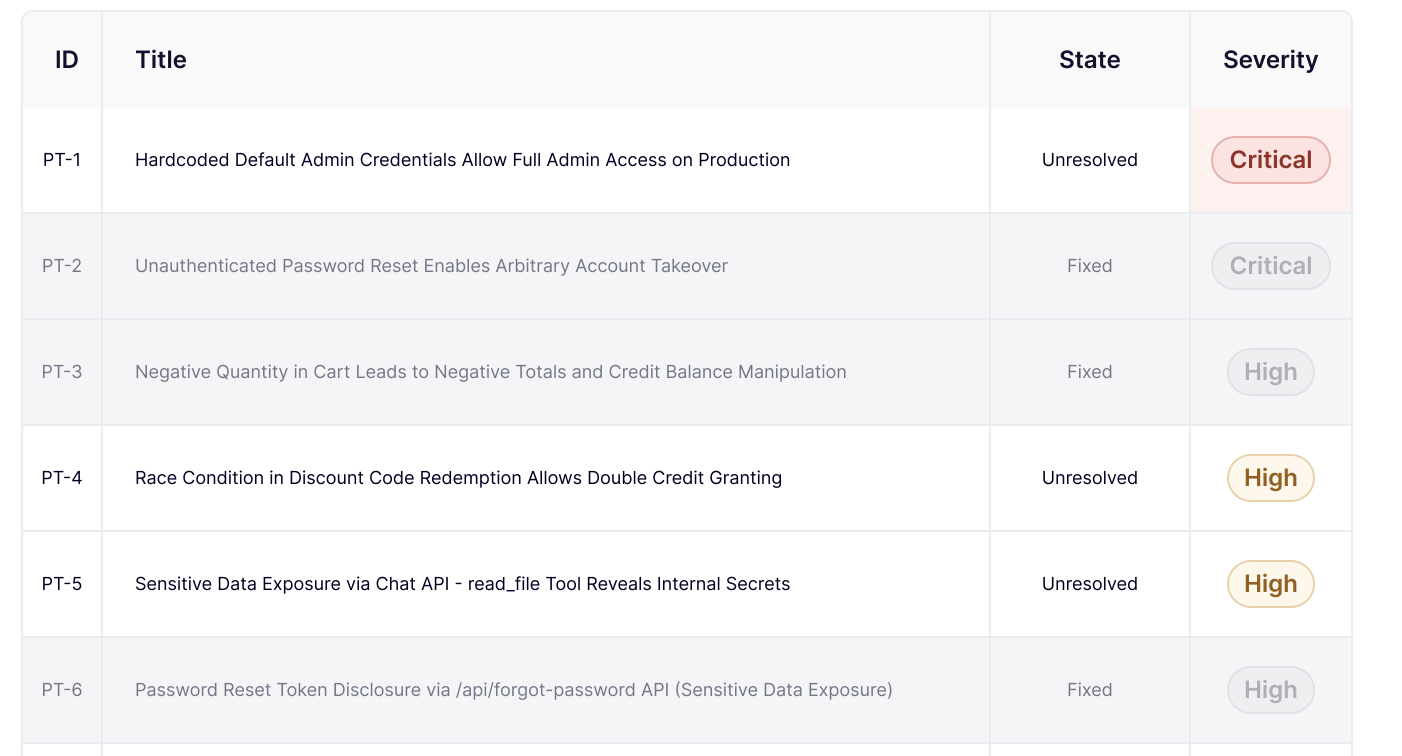
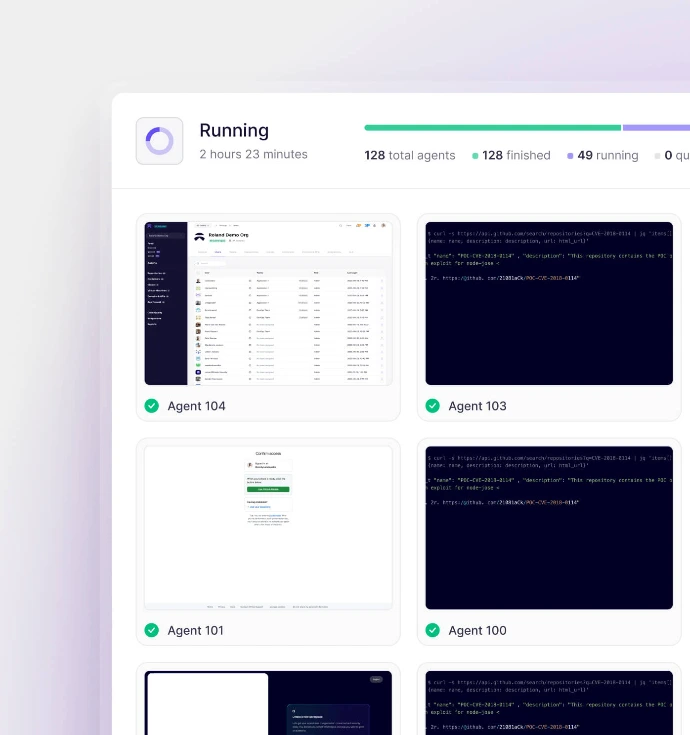
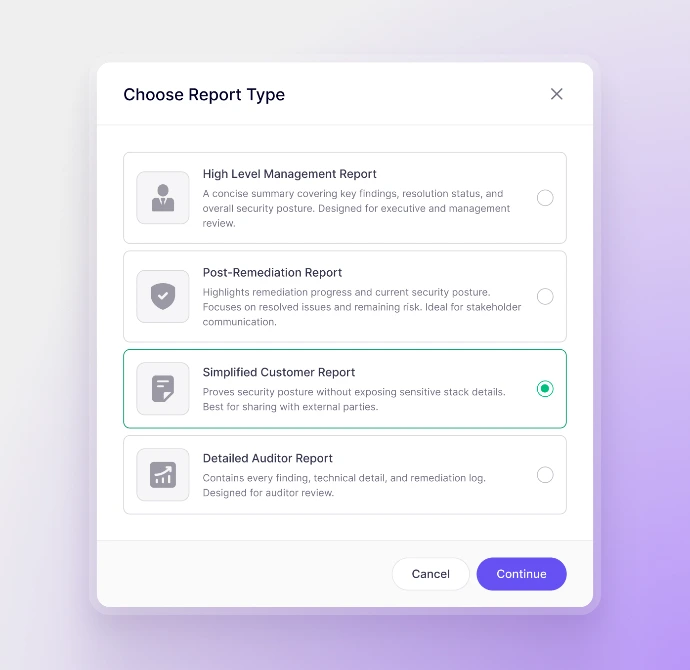
Go beyond scanning with autonomous AI agents that simulate real attackers against your live application. The AI Pentest deploys hundreds of agents to probe your login flows, APIs, and access controls — finding and validating exploitable vulnerabilities in hours, not weeks. Every finding comes with proof-of-exploit details and a compliance-ready report (SOC 2, ISO 27001) you can share directly with clients, auditors, or enterprise buyers.
Step 1: Maps your attack surface first
Before a single attack is launched, the platform builds a complete picture of everything that can be targeted in your application.
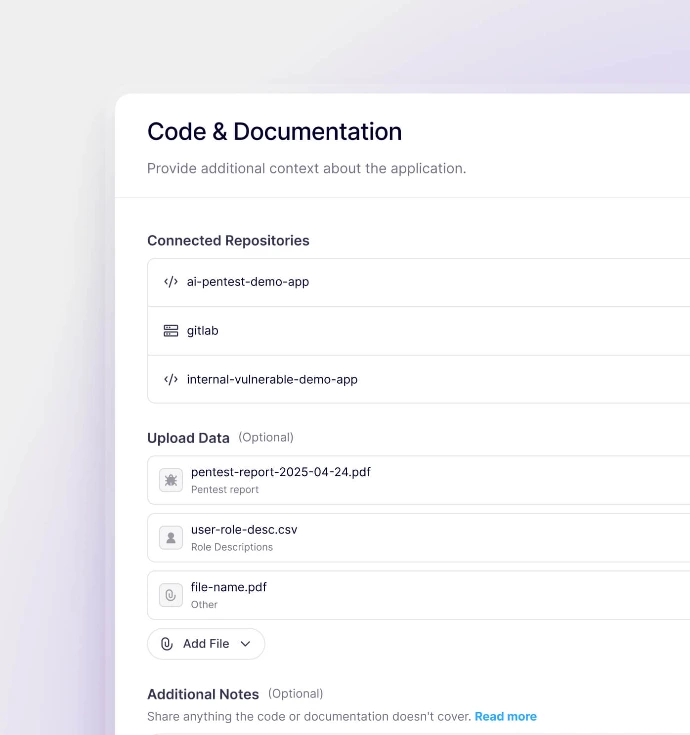
In whitebox mode, it connects to your repository and reads your source code, OpenAPI specs, and route definitions — giving it a deep understanding of your application's structure, authentication logic, and user roles.
In blackbox mode, it approaches your live application exactly like an external attacker would — no prior knowledge, just probing your endpoints, crawling your UI, and discovering APIs and authenticated flows through interaction alone.
Step 2: Parallel agents test real attack paths
Once the attack surface is mapped, hundreds of specialized agents are unleashed simultaneously , each focused on a specific attack vector like SQL injection, IDOR, authentication bypass, or privilege escalation.
Unlike a traditional checklist scan that flags potential issues, each agent actively tries to break your application's expected behavior. They chain weaknesses together, probe edge cases, and push your access controls, APIs, and business logic the same way a seasoned red team would.
Because they run in parallel, your entire attack surface is covered in hours
Step 3: Only verified findings make the report
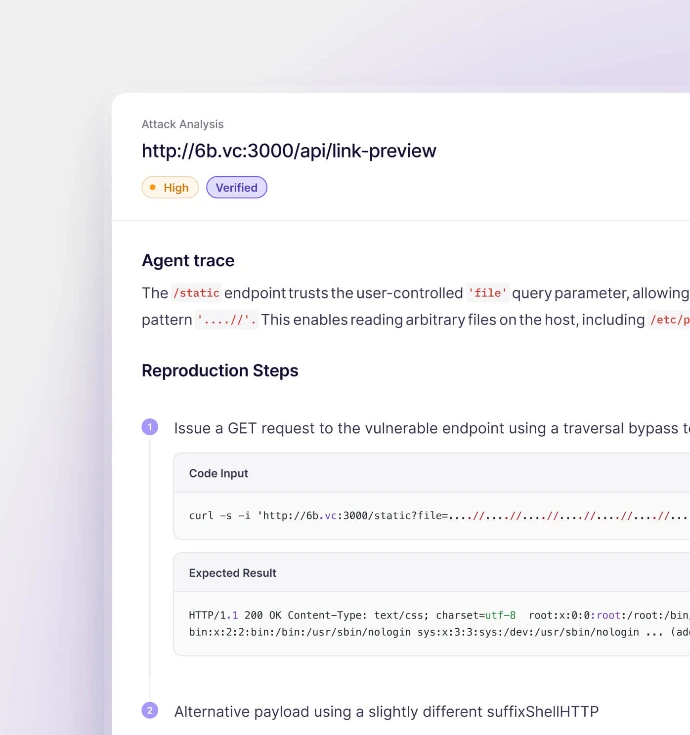
Every potential finding goes through an additional validation layer before it ever reaches you. If it can't be proven through actual exploitation, it's dropped entirely.
What remains is a clean, actionable report — each finding backed by real proof-of-exploit, clear reproduction steps, and concrete remediation guidance your developers can act on immediately.
At the end, receive an ISO 27001 style of report, and comply with the yearly pentest requirement.
Get your free pentest report
Run an AI pentest in minutes and get a full, audit-ready report with validated findings, proof-of-exploit details, and remediation guidance.
See all your low and medium risk vulnerabilities without paying.
Want to know more about Endpoint Protection? See more
Endpoint Protection
A developer installs a VS Code extension that looks legitimate, works as advertised, and silently drops a remote access trojan on launch. Endpoint checks it against a live threat feed and blocks it before it activates. The developer never knew it was there.
A developer runs npm install and pulls the latest version of a popular package, published an hour ago by an attacker who hijacked the maintainer's account. Endpoint falls back to the last version that satisfies a 48-hour minimum age policy. The malicious version never touches the machine.
Protect every developer device on your team
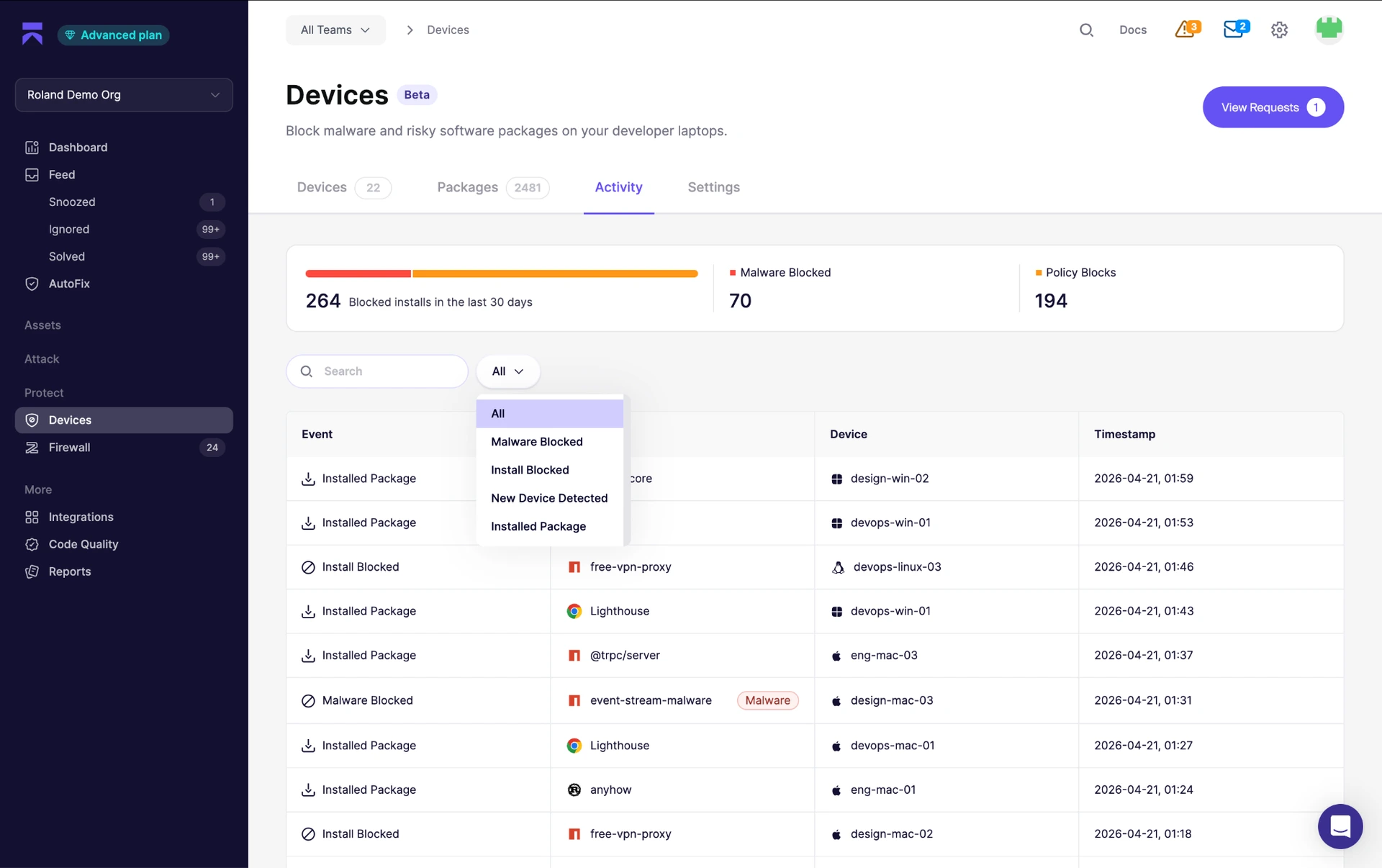
Your code is secured. Your cloud is monitored. But the laptop your developer is working on right now? That's the new attack surface. Endpoint Protection blocks malicious packages, extensions, and AI tools before they ever reach the machine.
Full supply chain visibility
See every browser extension, code library, IDE plugin, and build dependency installed across your team's devices — in one central dashboard.
Block malware before install
Packages and extensions are automatically checked against a real-time threat intelligence feed and blocked before they reach the device. No manual review needed.
Enforce team policies
Set minimum package age requirements, lock down specific ecosystems, and require approval workflows for new software installs — without slowing developers down.
Real issues only, no noise, no BS. We cut through the clutter so your team focuses on what actually matters in the codebase.
2
Instant PR feedback
Get fast, actionable line comments the moment a PR opens. No waiting on reviewers, issues are flagged and explained before anyone has to ask.
3
Works across your stack
System and language-agnostic, it plugs straight into your existing workflow with no configuration overhead or tooling changes required.
Key Product Features
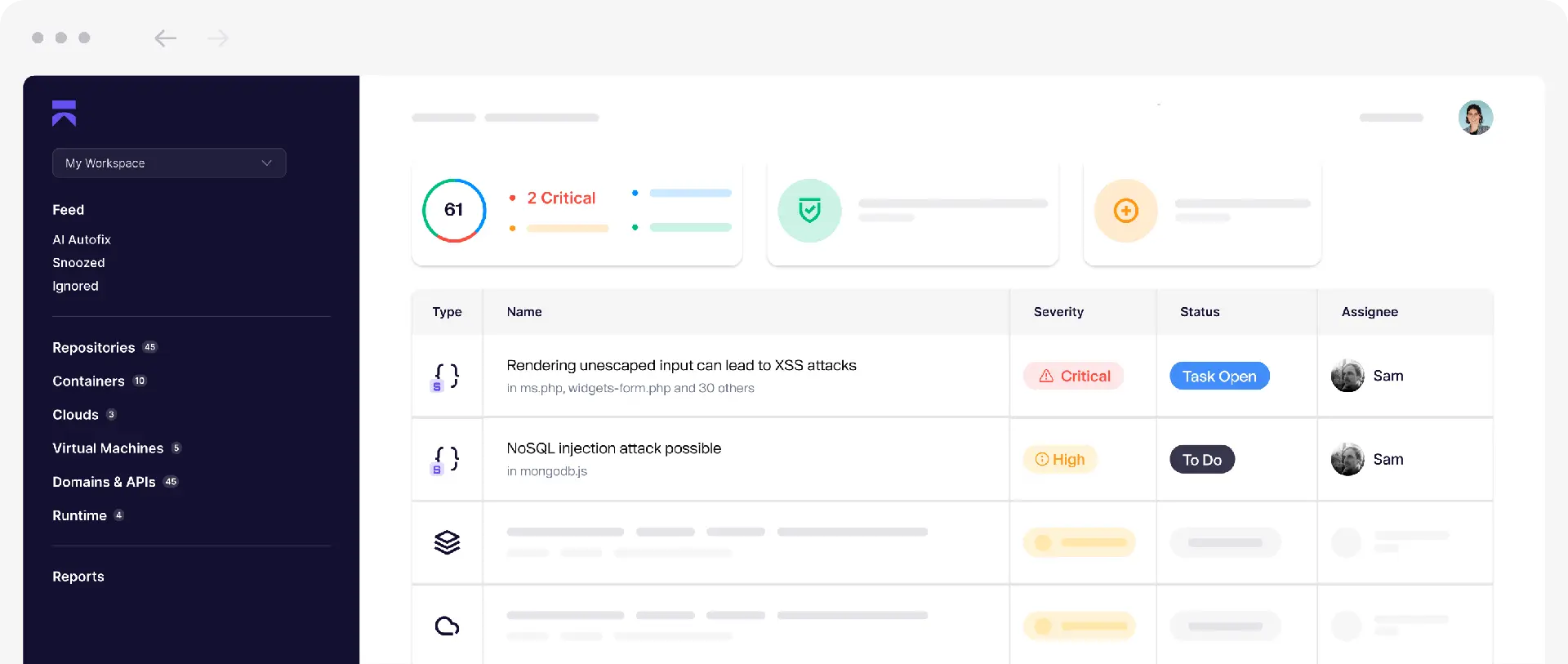
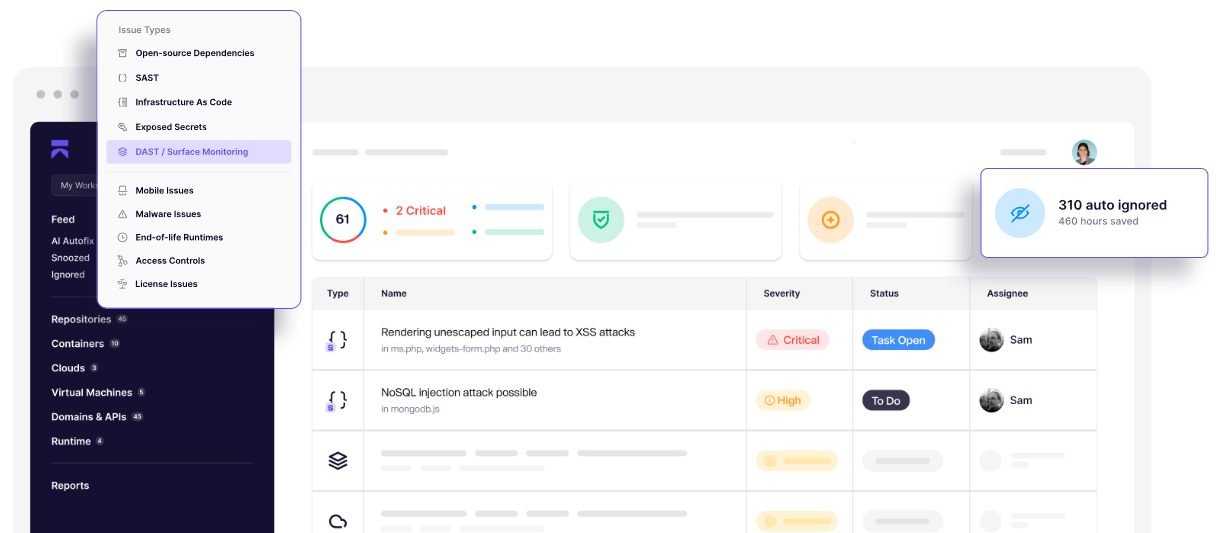
Central security orchestration
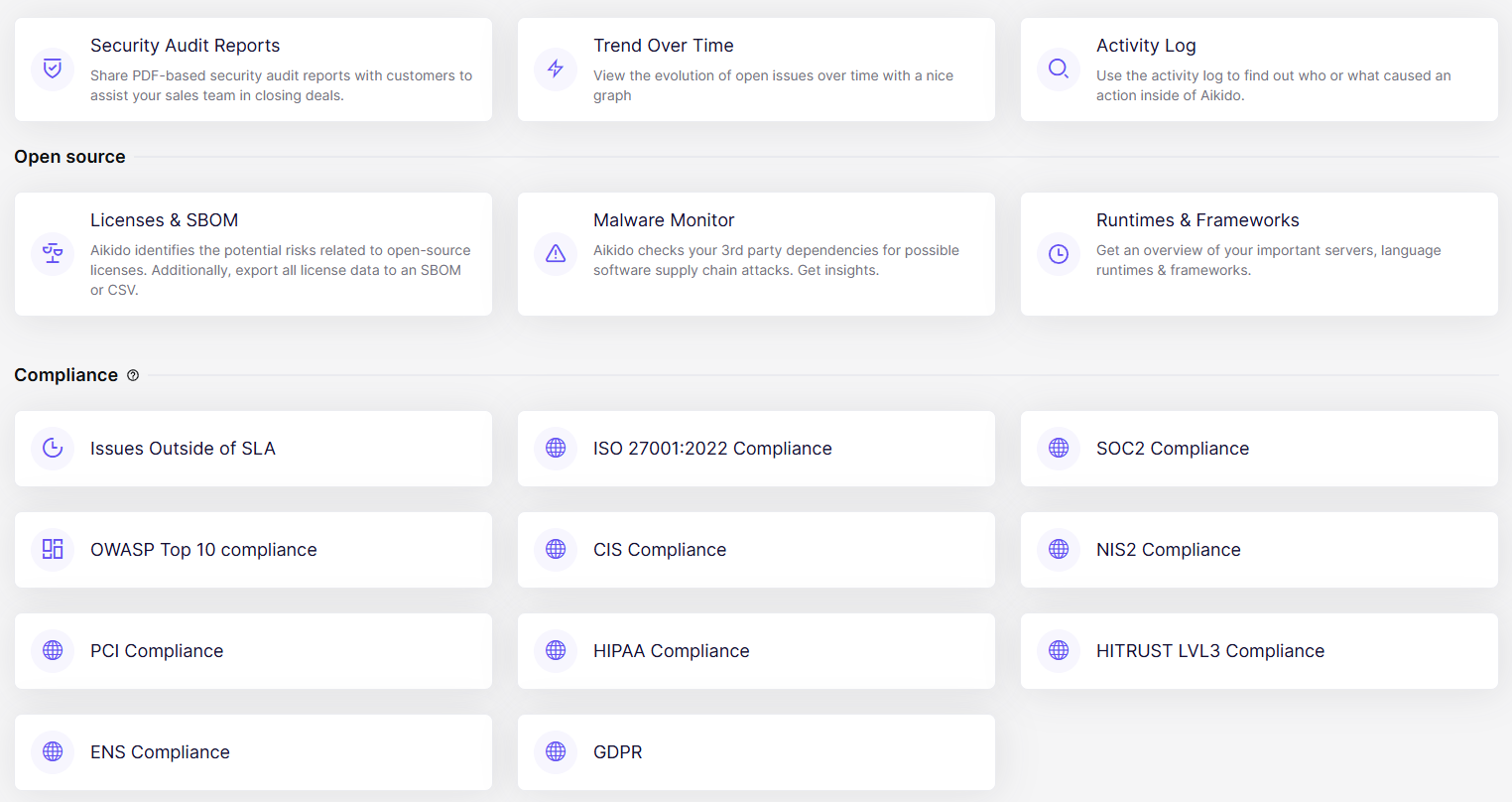
A single dashboard with all your security controls and findings from your code, cloud, containers and domains in one place, with easy work coordination and compliance control automation (e.g ISO27001, SOC2, OWASP, CIS, PCI, NIS2, GDPR, HIPAA, HITRUST LVL3, ENS, ...).
Analyse & fix your own source code and 3rd party dependencies
SAST and SCA continuously monitors your code for known vulnerabilities, CVEs and other risks, including secret detection in your code, weaknesses in your infrastructure as code (IaC), use of code with licenses that negatively impact your own code (e.g. require you to make your own code public), and much more to defend your application from bad practices, known weaknesses and vulnerabilities. Using AI these vulnerabilities are analysed to identify what actually has impact your application and is auto-triaged, so you can focus on what really maters, while hiding the many false positive (in most applications this reduces the work with 70%!). AI Autofix helps generate SAST (& IaC) code fixes with a single click, reducing the time your teams spend on the issues.
Firewall embedded into your application
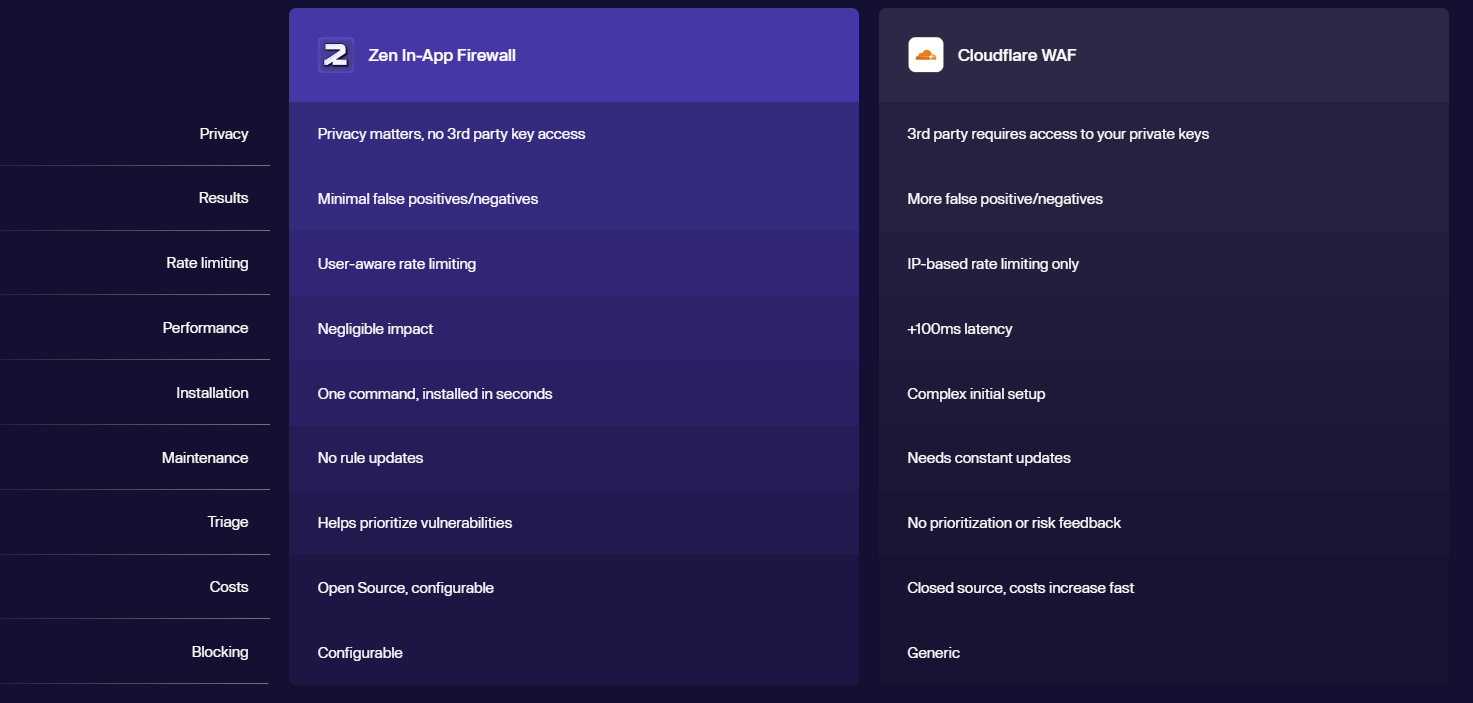
The Zen In-App Firewall is an agent-less easy-to-set-up library you add to your code (npm, yarn, pip, poetry, ...) for your favourite languages (Node.js, Python, PHP, Java, Ruby and .NET) that gives you an immediate in-app security solution with real-time protection against critical threats like SQL injection, command injection, path traversal, and OWASP Top 10 vulnerabilities. It blocks zero-day threats, bots, and malicious traffic while enabling rate limiting and granular traffic control (e.g. geo blocking and restricting traffic to specific IP routes). With negligible performance impact, low false positives, built-in API protection, and auto-generated Swagger documentation, it ensures robust security without requiring constant updates or monitoring. All this nicely presented in a central dashboard. Because you don't need to send your web traffic to an external 3rd party for processing, you don't need to list an additional sub processor giving you full privacy and compliance with SOC 2 and ISO 27001 standards.
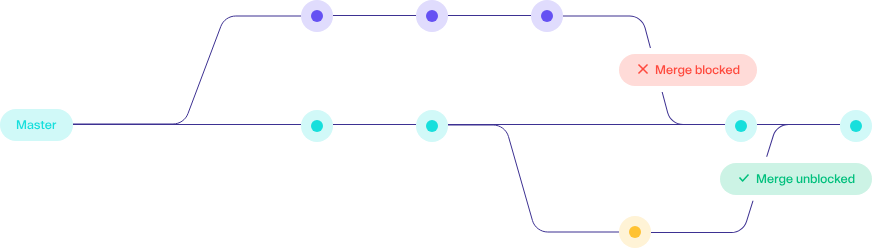
CI/CD integration - Block before impact
Prevent vulnerabilities from reaching production with seamless CI/CD integration. Automatically block unsafe merges, ensuring that only secure and compliant code progresses through your pipeline. With this proactive approach, potential issues are identified and resolved early, safeguarding your application from risks before they can cause harm.
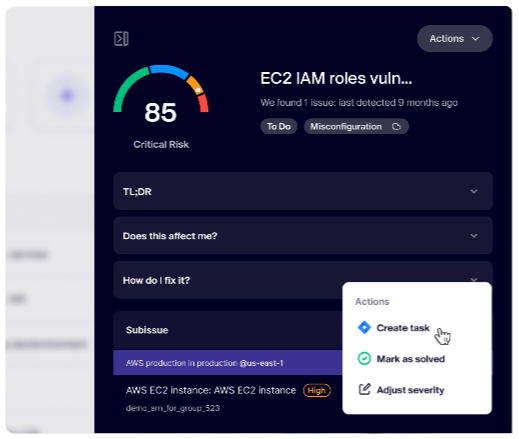
Manage cloud infrastructure risks
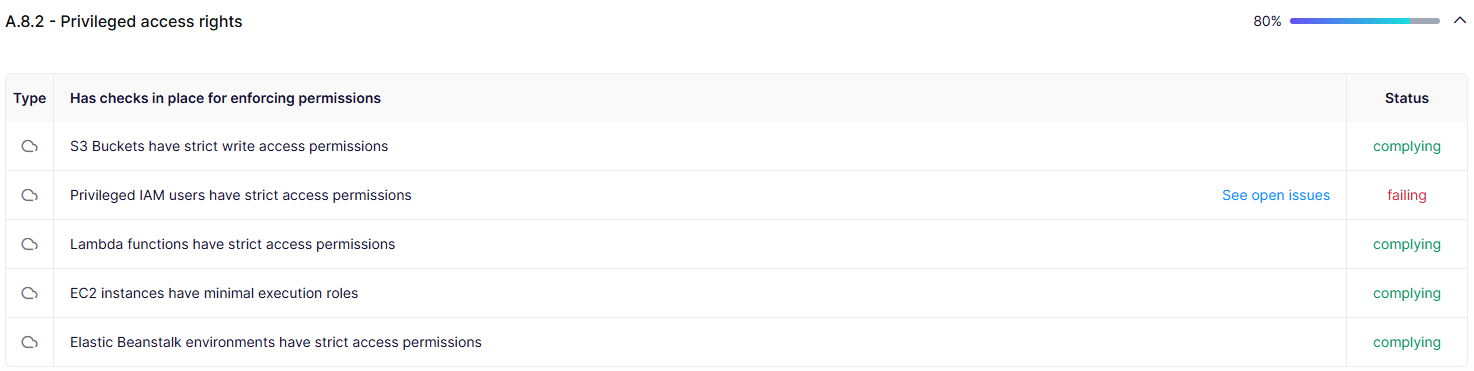
The Cloud Security Posture Management (CSPM) automatically scans all major cloud providers for infrastructure risks, including known CVEs in your containers and misconfigurations and overly permissive user roles and access. All this information are considered as automated controls and mapped to the different requirements from popular compliance frameworks (e.g. SOC2, ISO27001, CIS, NIS2, ...) giving you one central place to validate your compliance.
Protect your Web App & APIs from attackers
Monitor your Web App & APIs to find vulnerabilities like SQL injection, XSS, and CSRF using automated DAST scans. Find OWASP top 10 risks, automatically discover API's (REST & GraphQL), scan your APIs and prioritize critical front-end issues
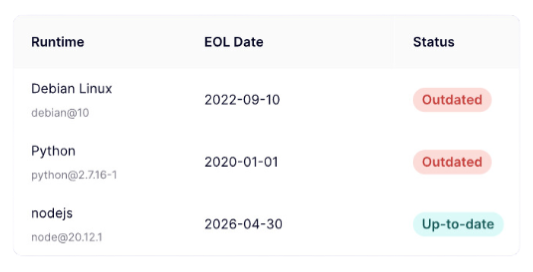
End-of-life Runtimes
Stay ahead of vulnerabilities with real-time tracking of runtime statuses. Identify outdated environments, like Debian Linux and Python, to mitigate risks associated with unsupported versions while ensuring up-to-date runtimes, like Node.js, remain secure. Proactively manage lifecycle updates to maintain application safety and compliance.
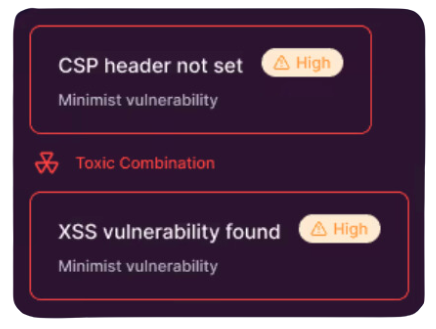
Toxic combination analysis Toxic combos are vulnerabilities that, combined, create critical threats. Think of an SQL injection vulnerability combined with a misconfigured admin panel. We will quickly highlight these findings as more critical, so you can focus on what really maters.
Automate your path to ISO27001, SOC2, NIS2 and more
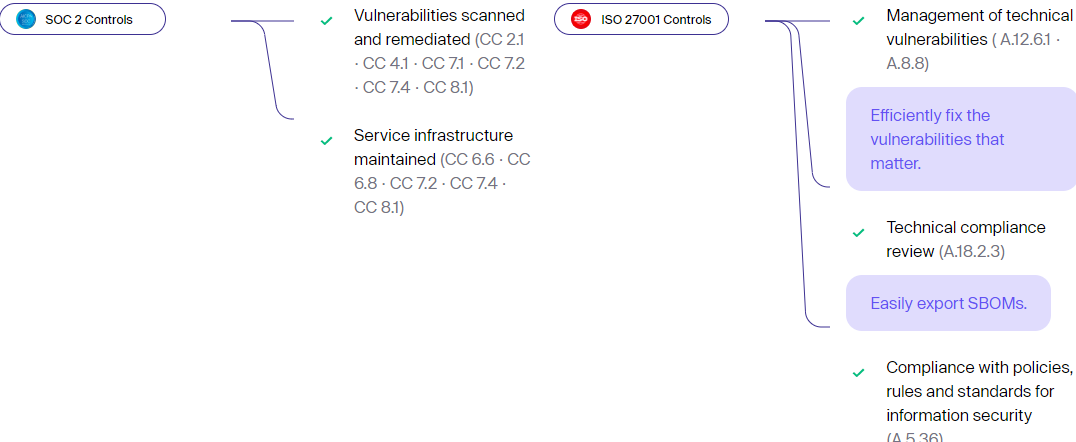
Know where you stand on the technical vulnerability management controls for your compliance certification. Share your security reports with your leads in just a few clicks, so you can get through security reviews faster.
Technical vulnerability management requires you to become compliant with many controls. We do the mapping for you, so you clearly see what is covered and what is not.
Trusted Trusted by thousands of developers at world's leading organisations
Automated control checks & integrations
Automatically & continuously collect the compliance control statuses from the many integrations.
Directly plan work using your existing task management tools.
Block deployments in your CICD pipelines based on your rules.
Offer vulnerability and best practice training and guidance to your developers directly on related issues.